
Views: 218 Author: Yijia Plastic Publish Time: 2026-09-04 Origin: Site
Content Menu
● PVC Bar Mat vs. Rubber Bar Mat at a Glance
● What Is a True Rubber Bar Mat?
● PVC Bar Mat Advantages for Branded Businesses
>> Better Customization Freedom
>> Practical Cleaning and Spill Management
>> Efficient Option for Promotional Programs
● When a Rubber Bar Mat Is the Better Choice
● The Most Common Buying Mistake: Comparing Labels Instead of Specifications
>> Questions to Ask a Bar Mat Supplier
● A Practical Material-Selection Framework
>> Step 1: Define the Main Job
>> Step 2: Identify the Customer-Facing Moment
>> Step 3: Build Artwork for Manufacturing
>> Step 4: Validate Before Mass Production
● Compliance Should Be Planned Early
● Why Manufacturing Experience Changes the Result
● PVC or Rubber: Final Recommendation
● Create Your Custom PVC Bar Mat
>> 1. Are PVC bar mats and rubber bar mats the same thing?
>> 2. Is PVC suitable for custom logo bar mats?
>> 3. How do PVC bar mats help bars and cafés?
>> 4. Can I order a PVC bar mat in a custom shape?
>> 5. What artwork works best for a PVC bar mat?
>> 6. Are custom PVC bar mats easy to clean?
>> 7. What information should I provide when requesting a quotation?
Choosing between a PVC bar mat and a rubber bar mat is not simply a material decision. It affects day-to-day bar operations, cleaning workload, brand visibility, product longevity, compliance planning, and the impression your venue or promotional campaign leaves with customers.
For restaurants, cafés, breweries, hotel bars, beverage brands, and promotional merchandise buyers, PVC bar mats are often the stronger option when custom branding, color accuracy, flexible shapes, and scalable OEM/ODM production matter most. True rubber bar mats can be preferable for highly rugged, utility-led applications where maximum grip and heavy-duty resilience outweigh visual detail.
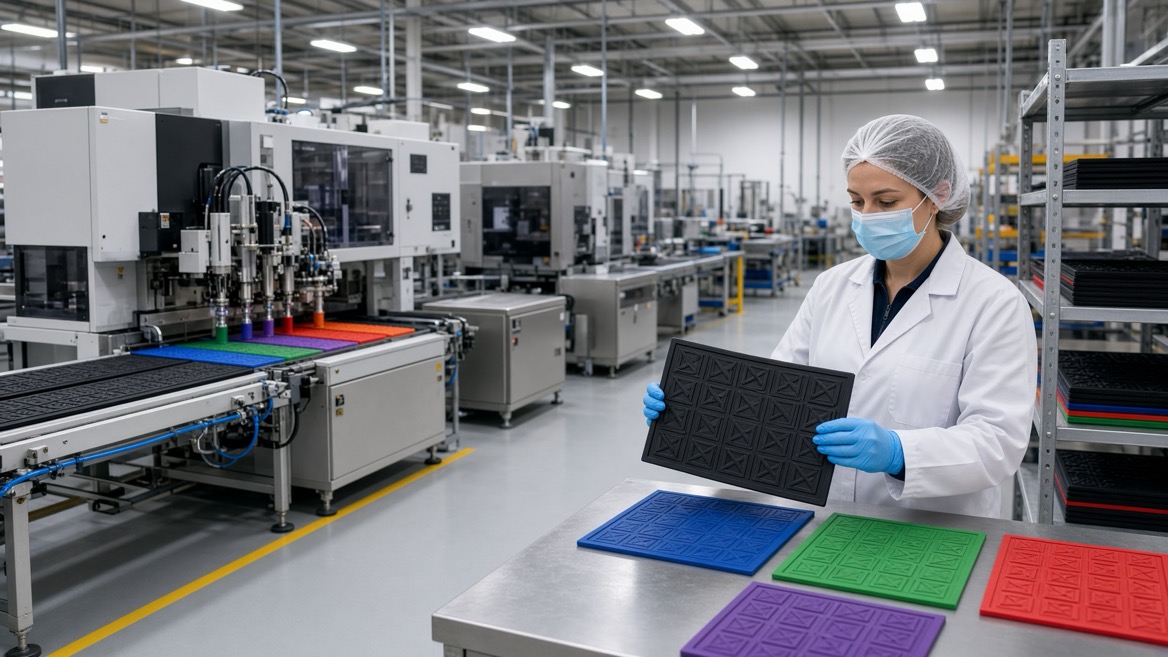
At Yijia Plastic Products Co., Ltd., we have spent 18 years developing, manufacturing, and supplying PVC soft-rubber promotional products, including custom PVC bar mats, for global brands and commercial buyers. From our 3,000-square-meter factory, supported by 10 automated production lines and advanced dispensing equipment, our team helps customers turn functional counter protection into a practical, highly visible brand asset.

The phrase “rubber bar mat” can be confusing in the market. Many products marketed as rubber bar mats are actually made from soft PVC, while others use natural rubber, synthetic rubber, nitrile rubber, silicone, or mixed materials.
That distinction matters because each material performs differently in real commercial settings.
A bar mat must do more than sit under a drink. It may need to:
Keep glasses, cocktail shakers, and bottles stable
Catch drips and reduce countertop mess
Protect bar surfaces from scratches and impact
Support faster wipe-down and cleaning routines
Display a logo clearly in customer-facing spaces
Withstand frequent contact with water, syrups, alcohol, and cleaning products
Meet the material and compliance expectations of the target market
For a branded beverage campaign, a custom PVC bar mat can function as a silent sales tool. It places your logo directly where bartenders prepare drinks and where customers naturally look while ordering, waiting, or socializing.
| Feature | PVC Bar Mat | True Rubber Bar Mat |
|---|---|---|
| Best use | Branded promotions, cafés, bars, restaurants, events | Rugged utility, heavy-use work areas |
| Logo detail | Excellent for raised logos, color fills, and fine details | Usually more limited, especially for intricate artwork |
| Color options | Broad color-matching potential | Often limited to darker or simpler color choices |
| Custom shapes | Highly flexible | Possible, but often less efficient for detailed designs |
| Grip | Good when designed with anti-slip texture | Excellent, especially in demanding wet environments |
| Cleaning | Easy to rinse or wipe | Can require more attention depending on texture and material |
| Weight | Generally lighter | Usually heavier |
| Cost efficiency | Strong for custom promotional production | Can be higher for branded and complex molded designs |
| Typical visual style | Bright, dimensional, brand-forward | Industrial, practical, understated |
| Best buyer priority | Brand exposure and customization | Heavy-duty functional grip |
The right choice depends on the purpose of the mat—not only the material label.
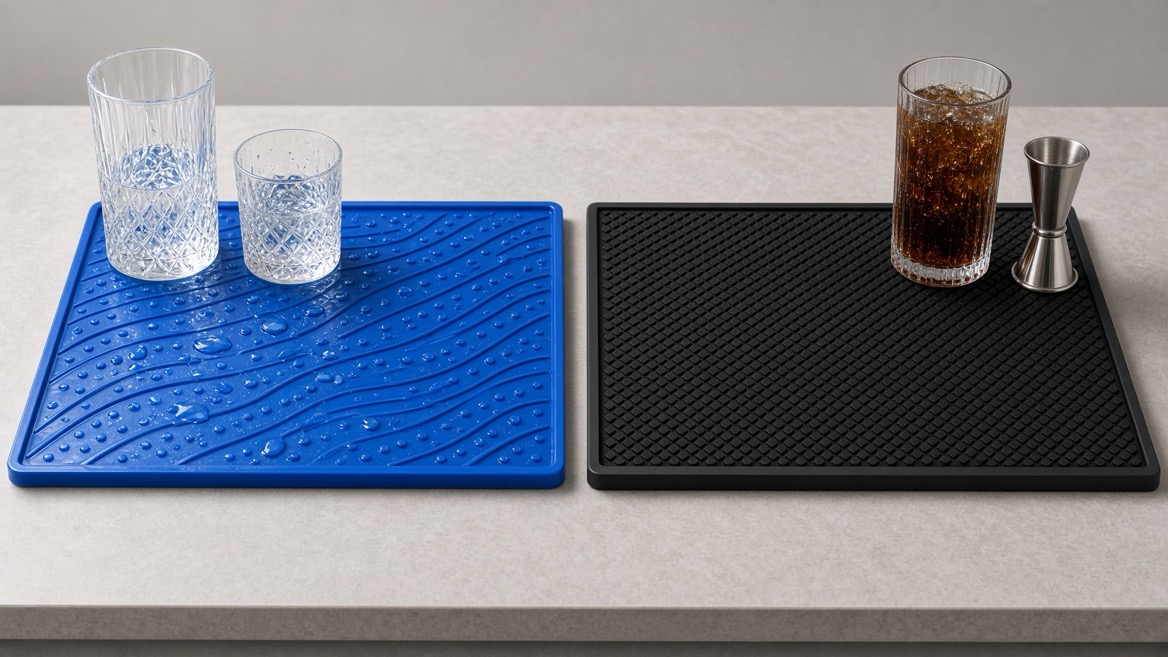
A PVC bar mat is a flexible molded mat typically made from soft polyvinyl chloride. It is often designed with raised borders, drainage channels, textured surfaces, or circular nubs that help retain spills and improve grip for glassware.
Unlike printed flat mats, a molded PVC bar mat can incorporate a logo directly into the product structure. The logo may be raised, recessed, filled with contrasting colors, or produced in a custom silhouette.
This is why custom PVC bar mats are widely used for:
Beer, spirits, coffee, and soft-drink promotions
Restaurant and café counter areas
Hotel bars and lounge spaces
Trade shows and brand activation events
Merchandise programs and corporate gifts
Retail displays and point-of-sale counters
Gaming, entertainment, and licensed-character campaigns
A well-designed PVC bar mat is both a service accessory and a physical brand touchpoint.
A true rubber bar mat is generally made from natural rubber or synthetic rubber compounds. These mats are often selected for their strong grip, weight, and ability to handle demanding service environments.
Rubber bar mats are commonly found in back-of-house spaces, commercial kitchens, wash areas, workshops, and high-traffic bar stations. They are usually designed primarily for function rather than detailed brand presentation.
Their strengths include:
High traction in wet conditions
Substantial weight that helps prevent movement
Rugged feel for utility-driven use
Good resistance to repeated physical contact
However, rubber may be less suitable for campaigns that require precise logo artwork, bright Pantone-oriented color matching, layered visual effects, or small decorative details. Compression molding processes can also make complex multi-color branding more challenging than soft-PVC dispensing and molding methods.
A PVC bar mat can make your logo part of the serving environment rather than an afterthought. Raised PVC details create a three-dimensional appearance that customers can see and touch.
This is particularly useful for beverage brands. A customer might not remember every poster in a venue, but they may repeatedly see a logo placed beneath the drink being prepared or served.
PVC is especially suitable for:
Multi-color brand logos
Mascots and character artwork
Raised lettering
Fine linework
Embossed patterns
Custom-shaped mats
Licensed promotional products
For example, a coffee brand can create a black PVC bar mat with a raised logo in its signature color, while using textured cup-placement zones to improve counter organization. A beer brand can use a bottle-shaped bar mat with dimensional foam, hops, or bottle-cap details around the logo.
Custom PVC bar mats are not restricted to standard rectangles. They can be developed as circles, shields, bottle silhouettes, product outlines, character shapes, or irregular designs that reinforce a campaign concept.
This flexibility is valuable when the product is intended for more than operational use. It enables the mat to become a collectible promotional item.
At Yijia, our OEM/ODM workflow supports customization across key areas:
Size and thickness
Shape and edge design
Logo placement
Raised or recessed artwork
Color combinations
Surface texture
Backside anti-slip design
Packaging and retail presentation
A standard bar runner may suit a hotel service counter. A custom shaped PVC bar mat may be better for a limited-edition beverage launch, entertainment collaboration, or gift-with-purchase campaign.
PVC bar mats are non-absorbent and generally simple to maintain. For routine commercial use, staff can remove loose debris, rinse the mat, wipe it with a damp cloth, and allow it to dry.
The molded structure helps separate glassware from pooled moisture. Drainage nubs, channels, or raised patterns can improve airflow and help reduce direct contact between the base of a glass and spilled liquid.
This design supports a cleaner service environment and can help reduce the chance of glassware sliding across a wet counter. Industry suppliers commonly position PVC bar mats as easy-clean, non-slip products with molded drainage features for bars and beverage service areas.
When a buyer needs large quantities of customized promotional merchandise, PVC can offer a practical balance of visual impact, durability, and production scalability.
For branded campaigns, it is important to consider the complete cost—not just the unit price. A low-cost generic mat may protect a counter, but it does not necessarily create a differentiated brand experience.
A custom PVC bar mat can support several objectives at once:
Functional bar protection
Logo visibility
Brand recall
Promotional giveaway value
Retail merchandise potential
Event display consistency
That multi-purpose value can make PVC a more strategic choice for marketing teams, sourcing managers, and brand licensing programs.
PVC is not automatically the answer for every application. A true rubber bar mat may be the better choice when the working environment is extremely demanding and branding is secondary.
Choose rubber when your priority is:
Maximum traction in consistently wet spaces
Heavy-duty utility use
A thicker, heavier mat with a more industrial feel
Minimal logo requirements
Back-of-house rather than customer-facing placement
Resistance needs that are specific to oils, chemicals, or temperature changes
For example, a busy dishwashing area or a high-volume back-bar station may benefit from a heavy rubber mat designed specifically for utility use. In this case, the main question is not whether the logo looks premium. The question is whether the mat remains stable and functional through repeated intense use.
The important lesson is simple: match the material to the actual operating environment.
Many buyers compare “PVC” and “rubber” as if each term describes one identical product. In reality, material performance depends heavily on formulation, design, thickness, texture, production quality, and intended use.
Before comparing quotations, ask every supplier the same technical questions.
What is the exact base material and material formulation?
Is the product soft PVC, natural rubber, synthetic rubber, nitrile, silicone, or a material blend?
What are the final dimensions, thickness, and weight?
How is the logo made: printed, raised, recessed, color-filled, or attached separately?
Does the design include drainage channels or anti-slip texture?
What test reports or compliance documents are available for the target market?
Can the supplier match Pantone colors or provide a pre-production sample?
What is the expected performance under water, alcohol, syrup, and routine cleaning?
Are there restrictions on small text, thin lines, or multi-color artwork?
What packaging options are available for retail, event, or promotional distribution?
This approach helps procurement teams avoid a common problem: receiving a product that looks acceptable in a digital mockup but fails to meet visual, functional, or compliance expectations after delivery.
Use the following decision process before you develop your custom bar mat.
Start with the core use case.
For brand activation, choose a material that supports vivid logo expression.
For bar service, prioritize drainage, stability, and cleanability.
For utility environments, focus on grip, thickness, and resistance requirements.
For retail gifts, prioritize appearance, packaging, and perceived value.
Ask where people will see the mat.
A PVC bar mat is especially effective at customer-facing locations such as:
Café counters
Cocktail bars
Hotel lounges
Brewery tasting rooms
Restaurant service rails
Trade-show booths
Retail checkout displays
If customers will interact with the mat visually or physically, the design deserves as much attention as the functional structure.
Avoid treating the mat as a flat printed poster. The strongest PVC designs use depth intentionally.
Consider:
Raised logo areas for touchable branding
Recessed zones for contrast
Thick lines for cleaner molding
Simplified small details
High-contrast color combinations
Borders that contain drips and frame the artwork
Textured drink-placement areas
Experienced manufacturers should review artwork before tooling or sample production. This step can prevent weak logo definition, color confusion, and unexpected production limitations.
A prototype or pre-production sample is essential for custom projects.
Review the sample for:
Color consistency
Logo legibility
Surface feel
Edge quality
Anti-slip performance
Drainage design
Flexibility
Odor expectations
Packaging presentation
A physical sample is more informative than a rendering because it shows how the mat performs under real lighting, handling, and wet-use conditions.
For international promotional products, material compliance should be part of product development—not an afterthought after the design is finalized.
Yijia Plastic Products Co., Ltd. holds certifications including EU RoHS, California Proposition 65, and Disney FAMA. These capabilities can be particularly relevant for buyers serving regulated markets, licensed merchandise programs, and global consumer brands.
California Proposition 65 is a consumer-warning law related to exposure to listed chemicals associated with cancer or reproductive harm. It is not a blanket product approval system, so buyers should confirm the specific compliance documentation, product formulation, test scope, and labeling requirements appropriate to their destination market.
EU RoHS is generally associated with the restriction of certain hazardous substances in electrical and electronic equipment. When buyers request RoHS-related documentation for PVC promotional products, the most useful practice is to clarify the material test scope and the customer’s specific supply-chain or market-entry requirement.
For any project, request documentation that is relevant to the finished product, intended market, and customer specification. Compliance claims should be precise, current, and supported by applicable test reports.
Custom PVC bar mats are detail-sensitive products. A small issue in color dispensing, mold definition, cure conditions, material flow, or trimming can affect the finished appearance.
With 18 years of industry experience, Yijia Plastic Products Co., Ltd. integrates research and development, manufacturing, sales, and project support for PVC soft-rubber gifts and promotional products. Our 3,000-square-meter facility includes 10 automated production lines and advanced dispensing equipment designed to support consistent custom production.
We have also worked with organizations and brands including Starbucks, Disney, McDonald’s, Pop Mart, and Tencent. This experience has shaped our understanding of what large-scale branded programs require:
Clear artwork communication
Reliable color execution
Consistent quality standards
Confidentiality and brand protection
Production planning for bulk orders
Packaging coordination
Responsive project management
A qualified supplier should not merely accept an artwork file. They should help identify production risks before the order is finalized.
For most customer-facing beverage, hospitality, restaurant, café, retail, and promotional applications, a custom PVC bar mat is the better all-round choice. It offers a strong combination of logo visibility, shape flexibility, molded detail, practical cleaning, and scalable customization.
Choose a PVC bar mat if you need:
A colorful, dimensional custom logo
Flexible shapes and decorative design options
Promotional or retail appeal
A branded countertop accessory
Easy daily cleaning
OEM/ODM support for a global campaign
Choose a true rubber bar mat if you need:
Maximum utility-focused traction
A heavier, more industrial solution
Performance in rugged or back-of-house environments
Minimal branding and visual customization
The best bar mat is not determined by the word “rubber” or “PVC” alone. It is determined by how well the material, design, compliance plan, and production process fit your business goal.
If your business needs a custom PVC bar mat that combines practical spill control with high-impact brand presentation, Yijia Plastic Products Co., Ltd. can support your project from concept to production.
Send us your logo, preferred size, target quantity, market destination, and intended application. Our team can help evaluate the most suitable structure, color treatment, surface design, packaging solution, and compliance documentation for your OEM or ODM program.
Turn every counter, café station, bar rail, and event display into a more functional brand experience.
Not always. Many suppliers use the term “rubber bar mat” broadly for flexible bar mats, including those made from soft PVC. A true rubber bar mat may use natural rubber or synthetic rubber. Always ask for the exact material specification before placing an order.
Yes. Soft PVC is widely used for custom logo bar mats because it can support raised logos, recessed details, multi-color fills, complex shapes, and strong visual branding. It is especially suitable for promotional products, hospitality venues, and beverage campaigns.
PVC bar mats can help stabilize glassware, catch drips, protect counters, and create a cleaner serving area. Molded textures and drainage structures can also reduce direct contact between glasses and spilled liquid.
Yes. Custom PVC bar mats can be developed in rectangular, circular, bottle-shaped, character-shaped, or other custom configurations. The final design should be reviewed for moldability, logo clarity, wall thickness, and efficient production.
Artwork with bold outlines, clear color separation, readable text, and simplified small details generally produces the best molded result. Very thin lines, tiny text, and complex gradients may need adjustment before production.
In most bar, café, and promotional settings, PVC bar mats can be cleaned by removing debris, rinsing with water, wiping with a damp cloth, and allowing the mat to dry. The recommended cleaning method should still be confirmed based on the specific product formulation and use environment.
Provide the desired size, shape, thickness, artwork file, Pantone references where applicable, order quantity, packaging requirement, target market, expected delivery date, and intended use. The more complete the brief, the more accurate the quotation and production recommendation will be.
All In One Merchandise — PVC Bar Mats: Not Rubber, Not Yet Silicone
Jin Sheu Enterprise — Custom Bar Mat and Promotional Products
California Office of Environmental Health Hazard Assessment — Proposition 65
European Commission — Restriction of Hazardous Substances in Electrical and Electronic Equipment


