
Views: 217 Author: Yijia Plastic Publish Time: 2026-09-12 Origin: Site
Content Menu
● Quick Answer: PVC or Silicone for Restaurant Coasters?
● What Is a Custom PVC Coaster?
● PVC Coaster vs. Silicone Coaster: Branding and Visual Impact
>> Why PVC Coasters Stand Out in Promotions
>> When Silicone Creates a More Premium Impression
● Material Performance in Restaurant Environments
>> Water Resistance and Condensation Management
● Cost, MOQ, and Customization Considerations
>> Why PVC Often Delivers Higher Promotional Value
● Compliance and Material Documentation for Promotional Coasters
● How to Choose the Right Custom Coaster
>> 2. Review Your Brand Artwork
>> 3. Decide Whether the Coaster Is Promotional or Operational
>> 4. Consider Campaign Duration
>> 5. Test Before Mass Production
● Expert Recommendation for Restaurant Promotions
● Create a Custom PVC Coaster for Your Next Campaign
● FAQ
>> 1. Are PVC coasters good for restaurants?
>> 2. Is a silicone coaster better than a PVC coaster for hot drinks?
>> 3. Can PVC coasters be made in custom shapes?
>> 4. Can a PVC coaster display multiple logo colors?
>> 5. What information is needed for a custom coaster quotation?
>> 6. Which coaster is better for a branded café giveaway?
>> 7. Can coasters be used with other custom promotional products?
For restaurant owners, café chains, beverage brands, and hospitality marketers, a coaster is more than a surface protector. It is a high-frequency brand touchpoint that sits directly beneath every coffee, cocktail, soft drink, or iced beverage served. When comparing a PVC coaster vs. silicone coaster for custom branded restaurant promotions, PVC is often the stronger choice for detailed logo reproduction, layered 3D artwork, flexible color matching, and large-scale promotional customization. Silicone can be the better option when the priority is heat tolerance, soft-touch texture, or a premium minimalist look.
The right material depends on how guests will use the coaster, how long the campaign will run, the complexity of the brand artwork, the target budget, and the restaurant's desired customer experience. For branded foodservice promotions, especially campaigns involving mascots, colorful logos, collectible designs, or themed beverage launches, a custom PVC coaster can turn a practical item into a memorable piece of brand merchandise.
At Yijia Plastic Products Co., Ltd., we have spent 18 years developing, manufacturing, and supplying PVC soft-rubber promotional gifts for global brands. With a 3,000-square-meter factory, 10 automated production lines, advanced dispensing equipment, and one-stop OEM/ODM capabilities, we help restaurant, retail, entertainment, and consumer brands translate visual identities into durable promotional products.
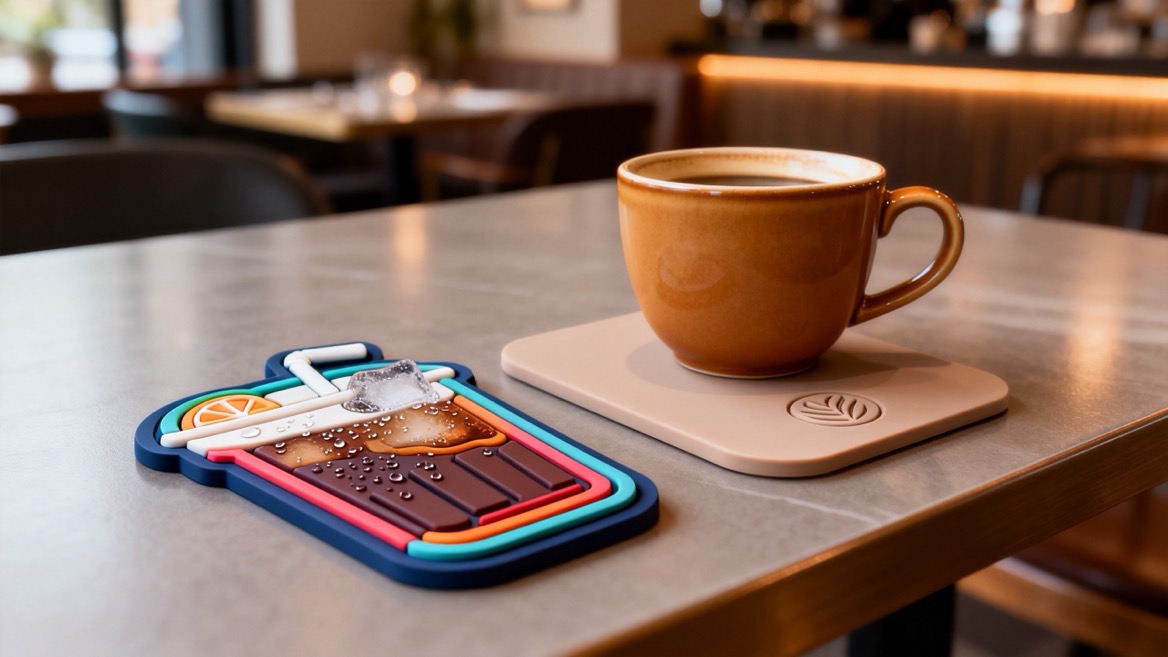
A PVC coaster is generally the better option for custom branded restaurant promotions when visual impact, 3D logo detail, color accuracy, campaign flexibility, and cost-effective customization matter most.
A silicone coaster is often preferable when a restaurant needs strong heat resistance, a soft premium hand feel, or a simple and understated brand application.
Neither material is universally "better." The stronger choice is the one that fits the specific use case.
| Comparison Area | PVC Coaster | Silicone Coaster | Better Choice |
|---|---|---|---|
| 3D logo detail | Excellent for raised lines, character artwork, layered colors, and molded branding | Good, but fine multi-layer artwork may be less visually crisp | PVC |
| Color customization | Strong color matching and vibrant multi-color designs | Good, especially for solid-color products | PVC |
| Soft-touch feel | Flexible, rubber-like feel depending on formulation | Naturally soft, smooth, and tactile | Silicone |
| Heat resistance | Suitable for common cold and room-temperature drink service | Better for high-temperature cups and cookware-adjacent use | Silicone |
| Anti-slip performance | Strong when designed with textured surfaces or raised rims | Naturally grippy and non-slip | Silicone |
| Promotional creativity | Ideal for mascots, logos, shaped products, collectible campaigns, and themed events | Better for simple, premium, functional designs | PVC |
| Production cost control | Often highly competitive for detailed custom promotional orders | Can be higher depending on grade and tooling | PVC |
| Custom shape options | Excellent for irregular silhouettes and detailed outlines | Good, though simpler designs are usually more efficient | PVC |
| Long-term restaurant use | Durable with the correct thickness, formulation, and quality control | Durable and resilient under repeated use | Depends on application |
| Best use case | Brand activations, beverage launches, themed restaurants, giveaways, loyalty gifts | Premium table service, hot beverage areas, minimalist branding | Depends on goals |
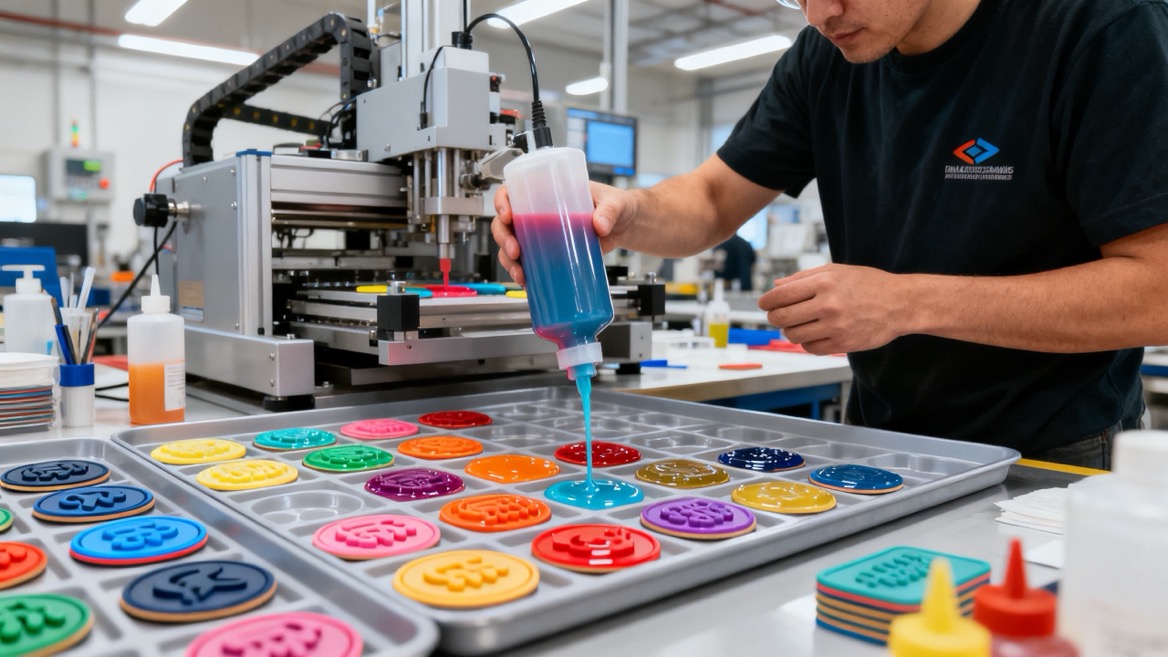
A PVC coaster is commonly made from soft PVC material, which can be molded into a wide variety of shapes, colors, thicknesses, and raised graphic effects. In promotional manufacturing, the artwork is typically built through a controlled dispensing and molding process that allows separate colors to form detailed logo areas, borders, lettering, and illustrations.
This makes PVC particularly useful for restaurants that want more than a flat printed logo.
A custom PVC coaster can include:
- Raised 2D or 3D logos
- Multi-color brand artwork
- Cartoon characters or mascots
- Custom outlines, such as a burger, coffee cup, cocktail glass, animal, or product shape
- Textured backgrounds for better grip
- Raised rims to help contain condensation
- Glow, glitter, translucent, or color-mixed effects where appropriate
- Front-and-back branding
- Matching PVC keychains, fridge magnets, patches, wristbands, and other campaign merchandise
For example, a bubble tea chain launching a seasonal drink could produce a coaster shaped like its signature cup, complete with raised tapioca pearls, a colorful logo, a limited-edition character, and a QR code area for loyalty-program access. This turns the coaster into a useful table item, a collectible giveaway, and a campaign reminder at the same time.
A silicone coaster is typically molded from silicone rubber. It is known for its flexible texture, anti-slip properties, and resistance to moisture and elevated temperatures. Silicone is commonly used in kitchenware, baking accessories, drink mats, and reusable household products because it remains stable across a wide temperature range.
For restaurant promotions, silicone coasters are usually chosen for a more refined and functional identity.
They work especially well for:
- Specialty coffee shops
- Hotel lounges
- Premium cocktail bars
- Fine-dining restaurants
- Wine-related promotions
- Branded homeware gift sets
- Merchandise collections with a minimalist aesthetic
Silicone can provide a smooth, soft, almost velvety feel. A debossed or embossed logo can look elegant, particularly when the coaster uses a single neutral color, such as black, charcoal, cream, sage green, or muted brand red.
However, a silicone coaster is usually less visually expressive than a multi-color PVC design when the project requires character art, intricate color blocking, or highly decorative themed branding.
For restaurant marketing, the coaster should not disappear into the table setting. It should reinforce brand recall without disrupting the dining experience.
This is where PVC frequently has a commercial advantage.
PVC soft-rubber coasters are highly suitable for bold restaurant branding because they can reproduce visual elements that are difficult to achieve through flat printing alone. Raised lines create dimension. Separate color fills give the logo stronger definition. Custom silhouettes make the item recognizable even before a guest reads the brand name.
A PVC coaster can be designed to resemble:
- A restaurant's signature food item
- A beverage cup or bottle
- A mascot or licensed character
- A seasonal promotional icon
- A location-specific landmark
- A product package
- A game, movie, music, or entertainment collaboration theme
This is especially valuable for quick-service restaurants, dessert shops, café chains, themed venues, and beverage brands where visual identity drives purchase decisions.
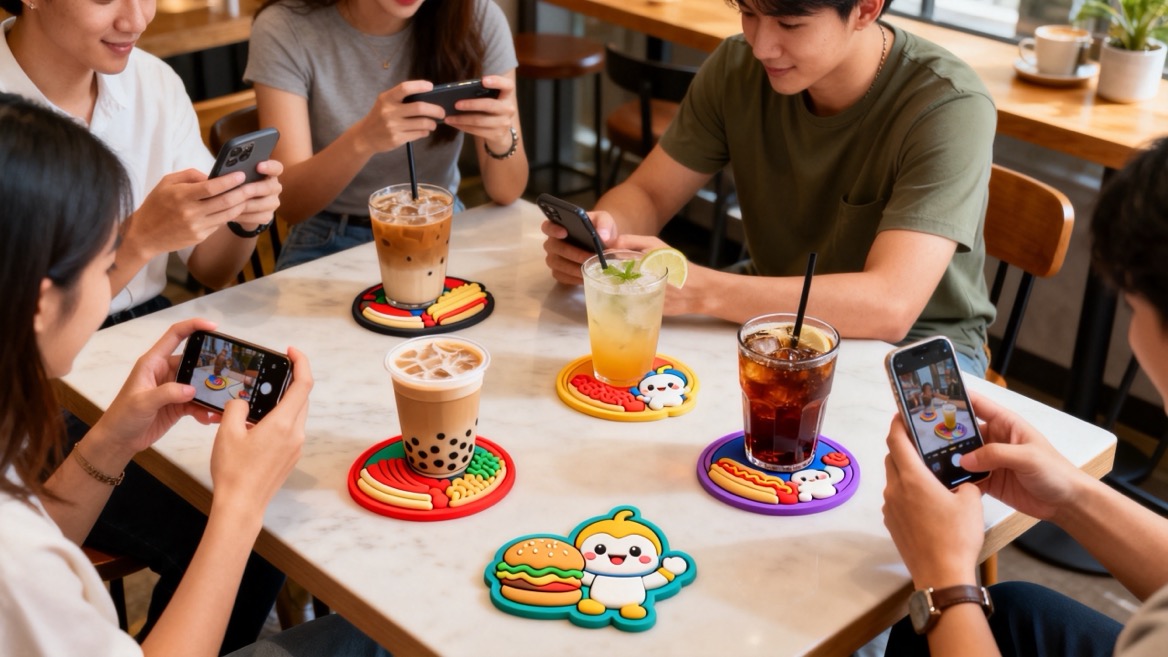
Brands with collectible cultures can also use a series strategy. Instead of offering one generic coaster, they can develop four to eight designs linked to seasonal drinks, holidays, city stores, menu categories, or character collaborations. Customers may then be more likely to return, collect, share, and post the items on social platforms.
Silicone is less dependent on graphic complexity. Its strength lies in simplicity and texture.
A high-quality silicone coaster can communicate a clean, modern, and durable brand personality. It works well when the logo is debossed, embossed, or presented in subtle contrast rather than in multiple bright colors.
For example, a boutique hotel bar may choose a thick matte-black silicone coaster with a debossed gold-toned logo. The goal is not to create a collectible cartoon object. The goal is to create a quiet visual signal of quality.
Choose silicone when your restaurant identity is built around:
- Minimalism
- Luxury
- Calm and neutral interiors
- Premium spirits or wine service
- Refined hospitality
- Long-term tabletop consistency
A restaurant coaster must handle repeated contact with wet glasses, cold cups, condensation, cleaning routines, shifting tableware, and occasional accidental drops. Material selection should therefore be based on real service conditions rather than appearance alone.
Both PVC and silicone can be designed to resist water and protect tabletops from condensation.
PVC coasters can include raised edges, recessed areas, and textured channels that help manage water from cold drinks. This is particularly useful for iced tea, cold brew, soda, beer, milk tea, smoothies, and cocktails.
Silicone naturally grips many table surfaces and glass bases well. It is effective for preventing sliding, especially when a restaurant uses glossy tabletops, polished stone, glass tables, or smooth bar counters.
For high-volume cold beverage service, both materials can perform well. The design matters as much as the base material.
A coaster with a shallow rim, textured surface, and appropriate thickness will generally manage moisture better than a completely flat coaster, regardless of whether it is PVC or silicone.
Silicone has a clear advantage in high-heat applications. It is often selected for use around hot beverage cups, teapots, serving items, and kitchen-related products because it can withstand higher temperatures than standard soft PVC.
If the coaster will mainly support:
- Espresso cups
- Hot tea cups
- Ceramic mugs
- Hot serving vessels
- Heated beverage presentations
silicone may be the safer functional choice, depending on the exact material grade and temperature requirements.
PVC is more appropriate for everyday drink promotions where the main use involves cold beverages, room-temperature drinks, branded giveaways, tabletops, bar counters, and retail packaging inserts.
A practical restaurant solution is to use PVC coasters for promotional campaigns and reserve silicone products for specific hot-drink or premium tabletop programs.
Both materials should be designed for easy cleaning. Restaurants should confirm washing conditions, detergent exposure, drying methods, and frequency before finalizing the material.
PVC coasters are typically easy to wipe clean with a damp cloth and mild detergent. Silicone coasters can also be cleaned easily and may be suitable for more demanding reuse environments, depending on the particular product design and material formulation.
For either option, avoid relying only on a sample appearance. Ask the supplier about:
1. Surface texture and dirt retention.
2. Raised areas that may trap residue.
3. Color transfer resistance.
4. Washing and drying recommendations.
5. Resistance to oils, coffee, syrup, and acidic beverages.
6. Batch consistency for repeat orders.
Cost is not only the unit price. For branded restaurant promotions, the real cost includes tooling, development time, design revisions, packaging, freight, campaign quantity, replacement needs, and the promotional value created by the product.
PVC coasters can provide a strong balance between customization depth and campaign cost. They are particularly efficient when a buyer wants to create distinctive shapes, multi-color artwork, raised logos, and themed collections at scale.
The tooling investment can be worthwhile because the same mold may support repeat production for:
- New restaurant openings
- Seasonal product launches
- Loyalty-program rewards
- Gift-with-purchase promotions
- Franchise marketing kits
- Employee gifts
- Branded retail merchandise
For a high-visibility campaign, a detailed PVC coaster can deliver more brand exposure per unit than a simple printed paper item or disposable tabletop promotion.
Silicone coaster pricing can vary significantly based on silicone grade, thickness, color requirements, molding complexity, logo treatment, packaging, and order quantity. A simple round silicone coaster with a debossed logo may be commercially practical. A complex multi-color silicone design with premium finishing may require more careful budgeting.
When comparing quotations, request like-for-like specifications. A low price is not meaningful unless the quote confirms:
- Material type and grade
- Coaster diameter or custom dimensions
- Thickness
- Number of colors
- Raised, debossed, or printed logo method
- Tooling cost
- Packaging method
- Compliance documentation
- Inspection standard
- Shipping terms
Restaurant buyers should avoid making broad safety claims based only on a material name. "PVC" and "silicone" describe material families, but the final product's suitability depends on the specific formulation, pigments, additives, intended use, and testing documentation.
For products intended only as drink coasters, the key question is usually whether the item is safe and appropriate for its stated use, rather than whether it is suitable for direct food contact.
If a product may directly touch food, beverages, or food-preparation surfaces, the buyer should request material-specific documentation for that intended use. U.S. rules treat a food-contact substance as a material that contacts food, food packaging, processing equipment, food-preparation surfaces, or cookware, and authorization requirements can apply where relevant.
For silicone items promoted for repeated direct food contact in the United States, suppliers commonly reference the requirements applicable to rubber articles intended for repeated use, including FDA 21 CFR 177.2600. Buyers should verify the specific material formulation and finished-product documentation rather than assuming every silicone item qualifies.
For PVC promotional products supplied into markets with restricted-substance requirements, buyers should request product-specific test reports and declarations. EU RoHS restricts ten hazardous substances in electrical and electronic equipment; although a coaster is not ordinarily electrical equipment, RoHS-related testing is often used by buyers as part of wider restricted-substance supplier controls.
At Yijia Plastic Products Co., Ltd., relevant compliance capabilities include EU RoHS, California Proposition 65, and Disney FAMA-related requirements. For a branded coaster project, we recommend clarifying the destination market, intended use, required test items, and documentation expectations before mass production begins.
Use this five-step selection process before requesting samples.
Ask what the coaster must do every day.
- Protect tables from cold-drink condensation.
- Support hot coffee or tea service.
- Act as a collectible promotional giveaway.
- Reinforce brand identity in a dining environment.
- Serve as a retail merchandise item.
- Be used repeatedly in a high-volume restaurant.
If the answer focuses on visibility and campaign engagement, PVC is usually the stronger starting point. If it focuses on heat and understated utility, silicone may be more appropriate.
Look closely at the logo and campaign visual system.
Choose PVC if the artwork includes:
- Multiple colors
- Fine outlines
- Characters
- Decorative details
- Layered logos
- Product-shaped silhouettes
- Seasonal illustration
Choose silicone if the artwork is:
- A simple wordmark
- A single icon
- A minimal monogram
- A debossed logo
- A premium one-color mark
A coaster can be a hospitality tool or a marketing asset.
An operational coaster mainly protects furniture and reduces cup movement. A promotional coaster encourages guests to notice, photograph, keep, collect, or talk about the brand.
PVC tends to perform better when the goal is brand memorability. Silicone tends to perform better when the goal is quiet, durable tabletop function.
For short-term seasonal promotions, limited-edition product launches, event activations, and licensed collaborations, PVC offers flexibility in shapes and decorative styles.
For permanent table service in a hotel, lounge, premium café, or upscale restaurant, silicone may create a more uniform long-term presentation.
Never approve a large coaster order based only on a digital rendering.
Request a physical sample and evaluate:
- Color accuracy against approved artwork
- Logo sharpness
- Thickness and flexibility
- Anti-slip performance
- Water pooling behavior
- Odor
- Surface cleanliness
- Edge finishing
- Durability after wiping and repeated use
- Packaging quality
From a manufacturer's perspective, the best custom coaster projects begin with the campaign goal, not with the material name.
If a restaurant wants guests to remember a new drink, recognize a mascot, collect themed merchandise, or associate a vivid design with the dining experience, PVC is usually the better promotional material. It supports creativity that silicone often cannot match as efficiently.
If a restaurant needs an elegant, heat-tolerant, soft-touch coaster with a simple logo and long-term tabletop role, silicone is a strong option.
For many restaurant groups, the most effective approach is not choosing one material forever. It is building a product strategy:
- Use PVC coasters for major marketing moments.
- Use silicone coasters for premium or hot-drink service.
- Create coordinated products for different customer touchpoints.
- Reuse approved brand colors, artwork, and packaging systems across the collection.
A successful restaurant coaster should protect the table, fit the service environment, and make the brand more memorable. If your campaign requires intricate logos, bold colors, character artwork, custom shapes, or a collectible 3D effect, a custom PVC coaster can deliver stronger visual impact than a standard flat promotional item.
Yijia Plastic Products Co., Ltd. provides one-stop OEM/ODM support for custom PVC coasters and PVC soft-rubber promotional gifts. With 18 years of manufacturing experience, a 3,000-square-meter production facility, 10 automated production lines, advanced dispensing equipment, and experience serving global brand projects, we can support product development from artwork evaluation and mold design to sampling, mass production, inspection, and packaging.
Contact us today to discuss your restaurant promotion, send your logo artwork, and request a custom PVC coaster design proposal.
Yes. PVC coasters are a practical choice for restaurants, cafés, bars, beverage shops, and promotional events, particularly when the brand requires custom shapes, raised logos, colorful artwork, or collectible designs. They can be designed with textured surfaces and raised rims to improve grip and manage condensation.
In most high-heat use cases, silicone is the stronger option because silicone generally has better heat resistance. For standard cold drinks, coffee-shop giveaways, brand activations, and decorative promotional campaigns, PVC can still be an excellent choice.
Yes. PVC is highly suitable for custom shapes. A coaster can be made as a circle, square, bottle shape, coffee cup shape, hamburger shape, mascot silhouette, logo outline, or other custom design. This makes PVC especially effective for restaurant branding and seasonal promotional campaigns.
Yes. Multi-color logo designs are one of the main strengths of PVC coaster manufacturing. Raised areas can be filled with separate colors to create detailed logos, illustrations, text, borders, and visual effects.
A supplier will usually need your artwork, quantity, dimensions, thickness, shape, color count, logo effect, packaging requirements, destination country, target delivery date, and any required test or compliance documents. If the design is still developing, a simple sketch or reference image is often enough to begin a feasibility discussion.
A PVC coaster is often the better choice for a branded café giveaway because it can feature bright colors, raised 3D effects, playful shapes, mascots, and campaign-specific graphics. A silicone coaster may be better when the giveaway is intended to feel more premium, minimal, and homeware-oriented.
Yes. Restaurants and beverage brands often develop coordinated collections that include PVC coasters, keychains, fridge magnets, patches, luggage tags, wristbands, bottle openers, and bag charms. A consistent theme can increase campaign recognition and encourage collection behavior.
1. U.S. Food and Drug Administration. "[Food Packaging and Other Substances That Come in Contact with Food]." Information on food-contact substances and regulatory authorization requirements.
2. U.S. Food and Drug Administration. "[Inventory of Food Contact Substances Listed in 21 CFR]." Searchable information on substances and uses covered by U.S. food-contact regulations.
3. Specialty Silicone Products, Inc. "[FDA Silicone: Properties, Compliance & Applications]." Overview of silicone formulations and repeated-use food-contact considerations under 21 CFR 177.2600.
4. European Commission. "[RoHS Directive]." Official overview of the European Union's restricted-substances framework for electrical and electronic equipment.
5. SGS. "[European Commission Grants RoHS Exemption for Cadmium and Lead in PVC Applications]." Discussion of specific regulatory developments affecting recovered rigid PVC in defined electrical and electronic applications.
6. Promo Vista. "[Custom Silicone & PVC Coaster Sets]." Market example of custom coaster applications for hospitality, events, retail activations, and branded promotions.


